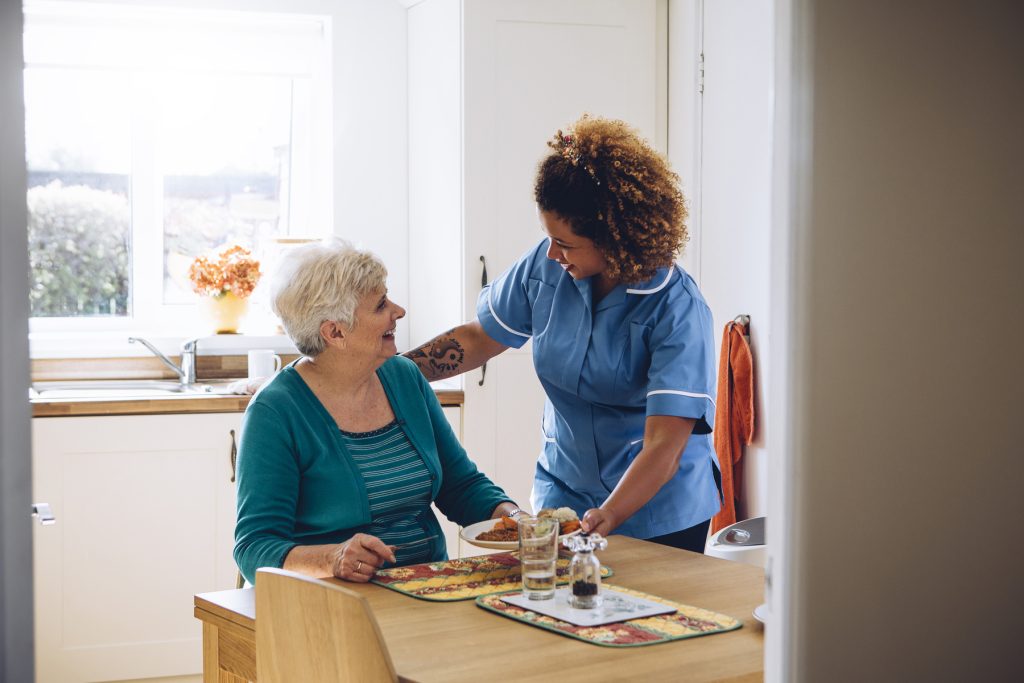
Families often think a carer just 'pops in' to check on mum or dad. This guide breaks down a real caregiver visit, hour by hour, what's included, what's off limits, and how care plans keep everyone on the same page.
An in-home caregiver helps with personal care, meals, medication prompts, household tasks and company, all set out in a care plan. They don’t do clinical tasks like injections or changing dressings. That stays with a district nurse.
What is an in-home caregiver?
An in-home caregiver is someone who visits a person at home to help with daily life. They support washing, dressing, meals, medication and company, but they’re not medically trained nurses.
A nurse treats illness and injury. A caregiver helps someone live well day to day.
Caregivers usually work for a home care agency, sometimes called a domiciliary care agency. Some families hire a carer privately, but an agency carer comes with training, checks and CQC oversight built in. CQC stands for Care Quality Commission, the body that inspects care services in England.
Read our complete guide to domiciliary care services if you want the full picture before you choose.
What does a typical caregiver visit look like?
Picture a 45-minute morning visit for a man called Tom, who has mobility problems after a stroke.
The carer arrives and says good morning, checking how Tom slept and how he feels. Then she helps him wash and dress, working at his pace and letting him do what he can himself.
Next she helps him move safely to the kitchen, using his walking frame. She makes breakfast, prompts him to take his morning tablets, and notes it on his MAR chart.
Before she leaves, she tidies the kitchen, checks his diary for appointments, and has a chat about his football team’s result. She writes a short note in his care file so the next carer knows how the visit went.
What personal care tasks do caregivers help with?
Personal care covers the private, physical tasks someone needs help with each day.
- Washing, bathing and showering
- Dressing and undressing
- Toileting and continence care
- Help moving around, getting up and sitting down safely
- Skin care, to check for sores or redness
Good carers do this with dignity. They knock, explain what they’re doing, and let the person keep as much control as possible.
Do caregivers help with meals and household tasks?
Yes. Most visits include practical help around the home.
This can mean cooking meals, doing light shopping, washing up, laundry and keeping the home tidy. Some families add a longer visit just for a proper shop and a batch of meals for the week.
Do caregivers manage medication?
Caregivers usually prompt medication rather than take full control of it.
Prompting means reminding someone to take their tablets and watching them do it. Administering means giving the medication directly, which some trained carers can do if it’s written into the care plan. Either way, it gets recorded on a MAR chart, the Medication Administration Record, so the family and agency can see what’s been taken and when.
Complex medical tasks, like injections or managing a syringe driver, stay with a district nurse, not a caregiver.
What about companionship and mental wellbeing?
A visit isn’t just tasks. Carers chat, share a cup of tea, and join in with hobbies like puzzles or a walk in the garden.
This matters. Loneliness affects health as much as any physical problem. A good carer also notices small changes, like low mood or confusion, and passes this on to the family or agency.
What can’t a caregiver do?
Caregivers work within clear limits, set out by their training and their agency.
| Caregivers can do | Caregivers can’t do |
|---|---|
| Personal care, meals, household tasks | Injections, wound dressing, catheter changes |
| Prompt or, if trained, give medication | Prescribe or adjust medication doses |
| Company and light mental health support | Give legal, medical or financial advice |
| Report concerns to family and agency | Manage a client’s money or sign documents for them |
Clinical tasks stay with a district nurse or GP. Legal decisions, like power of attorney, sit with the family and a solicitor, not the carer.
How do caregivers know what to do for each person?
Every client gets a care plan. This is a written document that sets out exactly what help someone needs, when, and how they like things done.
It’s built with the family, and reviewed as needs change, for instance after a fall or hospital stay. Agencies must meet CQC standards, so inspectors check that care plans are followed properly and staff are trained. Good agencies also keep families updated, so you always know what’s happening at each visit.
How much does this level of support cost?
Costs depend on how much help someone needs. A short daily visit costs less than several calls a day, and live-in care, where a carer lives in the home full time, costs more again but suits people needing round-the-clock support.
For full costs and what affects them, see our complete guide to domiciliary care services.
Common questions
Can a caregiver give my mum her tablets?
Most carers prompt medication and record it on a MAR chart. Trained carers can administer medication if it’s part of the care plan, but complex tasks stay with a district nurse.
Will the same person visit each time?
Good agencies try to keep a small, familiar team so your parent builds trust with them.
Can a caregiver do the shopping and cook meals?
Yes, shopping, cooking and light housework are standard parts of most visits.
What if my dad needs a dressing changed?
That’s a job for a district nurse, not a caregiver. Your care plan should say who to contact for this.
How long does a typical visit last?
Often 30 to 60 minutes, though some people need longer or more frequent visits. Live-in care covers full-time support instead.
How do I know what my parent’s carer will actually do?
Ask to see the care plan before care starts. It sets out every task, agreed with your family.
Key points
- A caregiver helps with washing, dressing, meals, medication prompts and company, not medical treatment
- District nurses handle clinical tasks like injections, wound care and blood tests, not caregivers
- Most caregivers give medication prompts and record them on a MAR chart, rather than administering it themselves
- Every visit follows a care plan built with the family, and reviewed as needs change
- Visits can range from a 30-minute check to several hours, or move to live-in care for round-the-clock support
- The Care Quality Commission inspects care agencies to check they meet proper standards
At Rising Star Care Solutions, we build every visit around a clear care plan, so families know exactly what’s covered and what to expect.
Filed under